Medical Assistant Training Near Me: Programs in Oklahoma City

The training program you choose determines how prepared you are on day one of your medical assistant career. Not just whether you can pass a certification exam — though that matters — but whether you can draw blood confidently, run an EKG without hesitation, manage a patient’s intake efficiently, and handle the pace of a busy clinical practice. For students in Oklahoma City, finding the right medical assistant training nearby means finding a program that delivers real clinical skills, not just classroom theory.
Here’s what to look for, what to avoid, and how programs in your area compare.
What Medical Assistant Training Should Include
A complete medical assistant training program covers both the clinical and administrative sides of the job — because the job requires both. Here’s what a quality curriculum looks like:
Clinical skills
- Vital signs — blood pressure, pulse, temperature, respiratory rate, oxygen saturation. You’ll take these dozens of times per day on the job.
- Phlebotomy — venipuncture technique, proper tube order, specimen labeling, patient management during blood draws
- Injections — intramuscular, subcutaneous, and intradermal technique. Vaccines, allergy shots, insulin, B12.
- EKG/ECG — 12-lead electrode placement, running the test, recognizing common artifacts
- Point-of-care testing — urinalysis, blood glucose, rapid strep, flu, pregnancy tests
- Infection control — sterilization, autoclaving, OSHA standards, PPE protocols
- Patient preparation — positioning for exams, draping, assisting providers during procedures
- Wound care — dressing changes, suture and staple removal under supervision
Administrative skills
- Medical terminology — the language of every chart note, order, and communication in healthcare
- Electronic health records (EHR) — data entry, documentation, and navigation in systems like Epic, eClinicalWorks, and Athena
- Scheduling and patient flow management
- Insurance verification and prior authorization basics
- HIPAA compliance — patient privacy in every interaction
Professional readiness
- Patient communication — especially with anxious, confused, or difficult patients
- Resume preparation and interview skills
- Workplace professionalism and team dynamics
- CCMA certification exam preparation
Why “Near Me” Matters for Medical Assistant Training
Local externship placement
Your externship — supervised clinical experience in a real medical office — is one of the most valuable parts of training. When your program is local, your externship is local. That means you’re building connections with healthcare employers in Oklahoma City — the same employers who will be hiring when you graduate.
Networking within your community
A program in your area connects you to local healthcare professionals, classmates who live and work nearby, and an instructor network familiar with the Oklahoma City job market. Those connections pay dividends during your job search.
Practical logistics
A training program that requires a long commute becomes harder to attend consistently — especially when classes run on evenings and weekends and you’re managing work and family responsibilities. A nearby program removes that barrier.
How to Evaluate Medical Assistant Training Programs
1. Where does training happen?
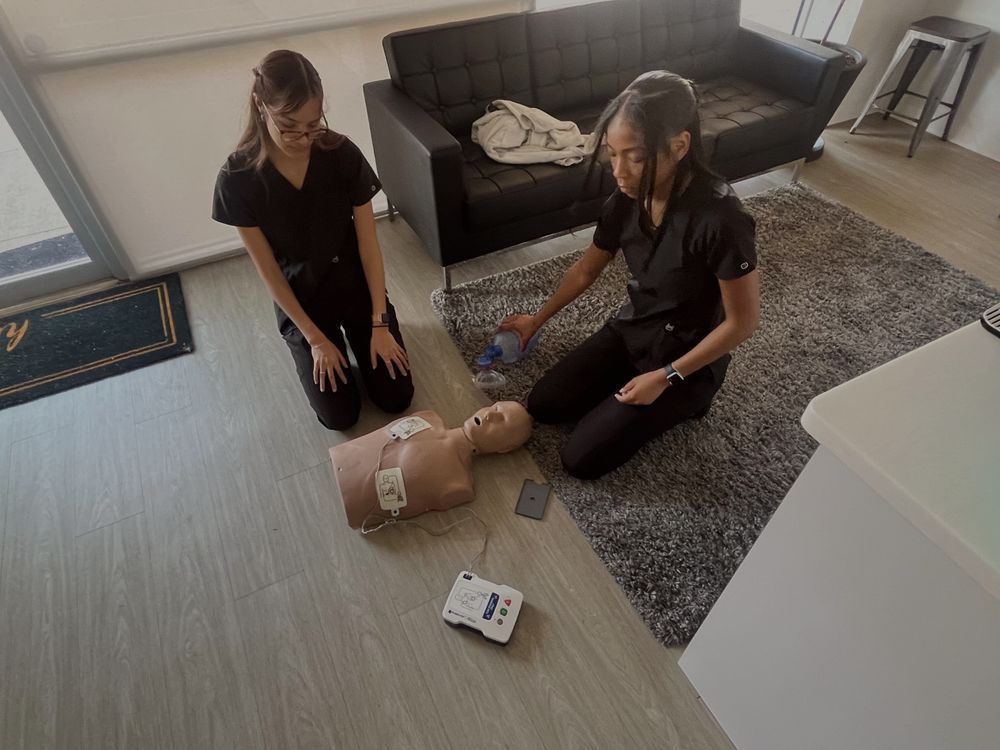
The best programs train students in real medical offices using actual clinical equipment. Classroom-only programs using mannequins and simulation labs can teach theory, but they don’t build the physical confidence that comes from working in a real clinical environment.
2. Is hands-on practice a core component?
Look at the ratio of hands-on training to lecture time. Programs heavy on lecture and light on clinical practice produce graduates who know the material but struggle with physical skills on the job.
3. Is certification prep integrated?
The CCMA (Certified Clinical Medical Assistant) exam is the most widely recognized certification in the field. Programs that weave exam preparation throughout the entire curriculum — rather than tacking it on at the end — produce higher pass rates and better-prepared graduates.
4. Is an externship included?
An externship places you in a local healthcare facility for supervised clinical experience with real patients. This is non-negotiable. Programs without externships leave a significant gap in your readiness.
5. What does it cost, and how do you pay?
Understand the full tuition before enrolling. Programs with clear pricing and payment plans that avoid student loans set you up for a debt-free start to your career. Be cautious of programs that minimize cost discussions or push you toward federal loans for short-term training.
6. How long does it take?
A focused medical assistant program takes approximately 18 weeks. Community college programs offering the same core competencies often take 12–24 months because they include general education requirements. The clinical content is comparable — the difference is time spent on coursework unrelated to the job.
Medical Assistant Career Outlook
The numbers make a strong case for this career path:
- Median salary: $42,000/year nationally (BLS)
- Job growth: 14% projected through 2032 — nearly triple the national average
- New positions: approximately 119,000 new jobs nationally through 2032
- Top-paying settings: specialty clinics, hospital outpatient departments, multi-physician practices
These fundamentals are strong and getting stronger. An aging population, expanded outpatient care, and increasing reliance on medical assistants to support provider productivity all drive sustained demand.
Oklahoma City Medical Assistant School in Oklahoma City
Program length: 18 weeks Schedule: Nights and weekends — built for working adults Training location: Real medical offices, not traditional classrooms Includes: Hands-on clinical skills, administrative training, externship placement, BLS certification, CCMA exam preparation Cost structure: No student loans. Payment plans available.
The 18-week curriculum covers every clinical and administrative competency tested on the CCMA exam and expected by employers. Training in real medical offices means you graduate with practical experience, not just textbook knowledge.
Take the Next Step
Finding medical assistant training near you is the first step. Making sure it’s the right training is what determines your success.
- See the full curriculum: Program details
- Review tuition and payment plans: Tuition
- Talk to our team: Contact us
- Apply today: How to apply
You're only a few months from the medical assistant career you deserve.